Commingle
Streamline your recycling program with commingled recycling services from Crown Waste Solutions. Our system allows for the easy disposal of mixed recyclable materials in one container. Whether you require a single, centralized bin or a set of bins designed for different material types, Crown Waste Solutions has a solution to fit your exact specifications. For the highest-quality recycling bins in Australia, choose Crown Waste Solutions.
For Multiple Recyclable Waste Streams
This system simplifies the recycling process and encourages more businesses to participate.
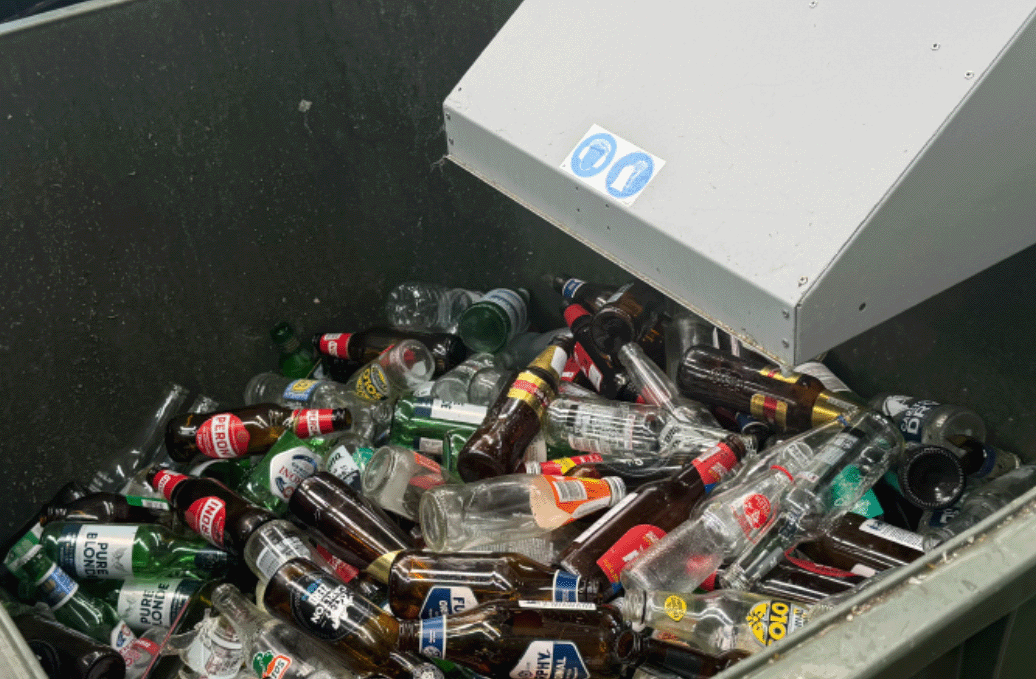
Commingled = Efficient
ACCEPTED Co-mingled recycling
In a Co-mingled recycling bin, the following types of waste are typically accepted:
- Paper
- Glass
- Aluminium
- Steel
- Plastic
Please note that these guidelines may vary depending on disposal site practices, and state government legislation and regulation.
Paper
Newspapers, magazines, office paper, junk mail, and cardboard (excluding waxed or plastic-coated cardboard)
Glass
Glass bottles and jars of any color (rinsed and with lids removed)
Aluminium
Beverage cans, aluminium foil (cleaned), and other aluminium containers.
Steel
Food cans, aerosol cans (empty), and other steel or tin containers
Plastic
Rigid plastic containers such as bottles, tubs, and containers, usually marked with a plastic recycling symbol and a number between 1 and 7 (excluding plastic bags, film, and wrap)
NOT ACCEPTED Co-mingled recycling
There are several types of waste that should not be placed in a Co-mingled recycling bin, these include:
- Plastic bags and film
- Food waste
- Clothing and textiles
- Hazardous waste
- Ceramics and porcelain
- Medical waste
- Nappies and sanitary products
- Garden waste
Plastic Bags and Film
Certain items pose challenges to the recycling process, as they can become entangled in recycling machinery and are therefore unsuitable for commingled recycling and certain plastic waste recycling streams. Polystyrene foam, commonly known as Styrofoam, is often excluded from commingled recycling programs due to its low recyclability rate and the complexities involved in its processing.
Polystyrene Foam (Styrofoam)
The low recyclability and problematic processing of this material make it unsuitable for commingled recycling
Food Waste
Food scraps and liquids can contaminate recyclable materials, making them harder to process
Clothing and Textiles
These materials require specialized recycling processes and should not be placed in co-mingled recycling bins
Hazardous Waste
Batteries, electronics, paint, chemicals, and light bulbs should be disposed of separately at appropriate recycling facilities or collection points.
Ceramics and Porcelain
These materials are not recyclable through co-mingled recycling and should be disposed of separately
Medical Waste
Syringes, needles, and other medical waste should be disposed of using appropriate medical waste containers and services.
Nappies and Sanitary Products
These items are not recyclable and should be placed in general waste bins
Garden Waste
Leaves, branches, and grass clippings should be composted or placed in designated green waste bins, if available